
"leaf rust"
400 article(s) found

Introduction to the quality and Flavor description of Arabica Coffee varieties
Bourbon coffee features iron pickup "Typica" iron pickup, the name sounds majestic, but in fact it is not so strong. It has a weak physique, poor disease resistance, easy to catch rust leaf disease and produces less fruit. It is one of the oldest native varieties in Ethiopia, and many Arabica are derived from iron pickups! The bronze color of the top leaf of the iron pickup is one of the characteristics, and the bean grain is large and pointed.

Introduction of Brand types of Coffee beans introduction of Coffee planting Environment
. The Robusta species (scientific name Coffea robusta Linden) is a leaf rust-resistant variety found in the African Congo, which teaches the Arabica species to be more resistant to the disease. People like to compare robusta species with Arabica coffee. In fact, robusta species is a mutant of Congo species (scientific name Cofffea canephora), so it should be compared with Arabica species.

The History and characteristics of Iron pickup
Iron pickup is delicate, vulnerable to rust (a common coffee disease), less yield, but excellent flavor, is one of the best boutique coffee beans. Their descendants also shine in the coffee industry, with the famous Blue Mountains of Jamaica and Kona of Hawaii, both variants of iron pickups. Typica has distinct characteristics, and it is probably the most easily identified variety. These plants.

Introduction to Columbia Coffee Coffee Variety of castillo Coffee grading system in Colombia
Professional coffee knowledge exchange more coffee bean information please follow the coffee workshop (Wechat official account cafe_style) Colombia's disease-resistant and prolific new variety Castillo, which has been resistant and productive for more than a decade, stumbled under the forced operation of the powerful Coffee producers Association (FNC), and finally entered mass production, but the mouth-picking boutique still cast a skeptical eye, shouting rotten rather than applauding
The National Union of Central and South American Coffee Diseases lend a helping hand.
The outbreak of coffee leaf rust in the coffee producing areas of Central and South America began at the end of last year, resulting in a reduction in local coffee production, which has seriously affected the local people's livelihood and economic industry. The National Cooperation Council of the Ministry of Foreign Affairs said that domestic plant pathologists have been invited to local friends to learn about the situation, and a regional plan will be planned to provide prevention and control assistance to friendly farmers through a combination of technology and funds.

How to brew Katim Coffee? Katim, how did you get the coffee?
Professional coffee knowledge exchange more coffee bean information Please follow the coffee workshop (Wechat official account cafe_style) in 1959, the Portuguese moved the Brazilian bourbon mutant Kaddura to East Timor to mix with Tim timor with Robusta blood, and unexpectedly successfully cultivated Kadim with strong disease resistance and super production capacity. As leaf rust affects coffee-producing countries around the world, in the International Group
Coffee Bean producing area-Asia-Vietnam (Vietnam)
Well-known representative coffee: Vietnam Coffee Vietnam is also one of the top coffee producers in the world. At present, the vast majority of coffee trees in Vietnam are Robusta, because the Arabica coffee trees in Vietnam were destroyed by leaf rust in the mid-19th century, and they were all planted in Robasta, which is resistant to leaf rust. Coffee grown by Robasta

Coffee bean producing areas-Asia-Vietnam
Well-known representative coffee: Vietnam Coffee Vietnam is also one of the top coffee producers in the world. At present, the vast majority of coffee trees in Vietnam are Robusta, because the Arabica coffee trees in Vietnam were destroyed by leaf rust in the mid-19th century, and they were all planted in Robasta, which is resistant to leaf rust. Coffee grown by Robasta

Indonesian Java coffee which brand is better for Indonesian coffee beans?
Professional coffee knowledge exchange more information about coffee beans Please follow the coffee workshop (Wechat official account cafe_style) in the 1880s, coffee leaf rust destroyed many trees on the island, coffee producers responded by replacing arabica coffee with liberica and robusta coffee. Both Liberian coffee and Robusta coffee are more resistant to leaf rust, but their characteristics

The relationship between coffee bean quality and altitude, the relationship between air temperature, and the harm of climate change to coffee trees.
Professional coffee knowledge exchange more coffee bean information please follow the coffee workshop (Wechat official account cafe_style) altitude: a symbol of coffee quality? Higher altitude is often associated with better sweetness and more complex coffee flavor; to be exact, there is a correlation between the two, but not causality. To a large extent, the factors that affect the quality of coffee

Flavor and taste of Indonesian Coffee Manor Coffee beans in Wahana Manor, Indonesia
The prosperity of coffee in Indonesia was not sustainable, coffee production was fatally hit at the end of the 18th century, and leaf rust, originally found in West Java, spread rapidly, destroying the Arabica coffee estate in Indonesia. The leading position of the coffee trade was replaced by the American producing countries. However, it is worth mentioning that the leaf rust disaster did not affect the eastern Indonesian producing areas, namely, Flores Island and Timor, today.

Vietnam is one of the top coffee producing countries in the world.
Vietnam (Vietnam) well-known representative coffee: Vietnam Coffee Vietnam is also one of the top coffee producers in the world. At present, the vast majority of coffee trees in Vietnam are Robusta, because the Arabica coffee trees in Vietnam were destroyed by leaf rust in the mid-19th century and replaced with Robusta coffee trees that are resistant to leaf rust.

Introduction of Indonesian Coffee Flavor characteristics of manors in Indonesian coffee producing areas Kahayang Gan Manor
The prosperity of coffee in Indonesia was not sustainable, coffee production was fatally hit at the end of the 18th century, and leaf rust, originally found in West Java, spread rapidly, destroying the Arabica coffee estate in Indonesia. The leading position of the coffee trade was replaced by the American producing countries. However, it is worth mentioning that the leaf rust disaster did not affect the eastern Indonesian producing areas, namely, Flores Island and Timor, today.
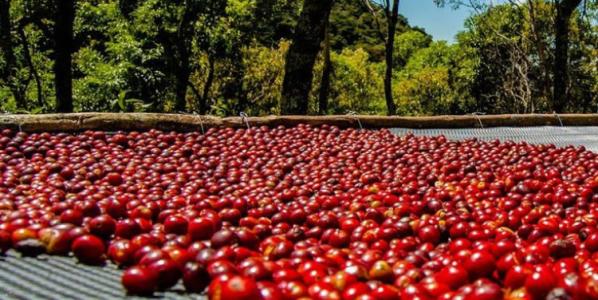
Brief introduction of Grinding scale varieties of Coffee Bean processing method in Kenya
Brief introduction of Regional treatment Grinding Calibration varieties of Kenyan Coffee Bean treatment Manor four main varieties are grown in Kenya, namely, sl28, sl34, K7, and ruiru11. Sl28 is the variety with the richest flavor, but because it is not very resistant to leaf rust, it can only be planted at the middle and high altitude where the leaf rust is not serious, so it has less yield and good moisture resistance of sl34, so it is suitable for planting at middle and high altitude.
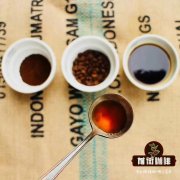
Coffee Storm-will coffee disappear from the world in the future?
Professional coffee knowledge exchange more coffee bean information Please pay attention to the coffee workshop (Wechat official account cafe_style) Climate change has affected the growth of coffee, especially the more sensitive Arabica beans are more sensitive to temperature, the increase in temperature will easily cause insect pests and leaf rust

Three native species of coffee, Arabica, Robusta.
Coffee, we generally refer to the finished product: the coffee we drink, also refers to coffee beans. Coffee belongs to the evergreen shrub of the genus Coffee of Rubiaceae. Coffee has some medicinal effects, such as waking up the brain, strengthening the stomach, stopping bleeding, dissipating heat, strengthening the body, etc., hee hee, if anyone is blinded by love, have a cup of coffee to wake up! There are about 40 species of coffee plants, but they can produce commercially valuable

Classification and characteristics of Coffee varieties with large Grain
Coffee varieties advantages and disadvantages large-grain coffee classification varieties and characteristics, also known as Liberian species, is an evergreen tree. The plant is tall, more than 10 meters high, the branches are thick and hard, grow obliquely upward, and the branches cork the fastest. The leaf blade is oval or round, the leathery leaf surface is glossy, the leaf end is closed, and the leaf margin is not corrugated. The fruit is large, oblong, the skin and pulp are hard and thick, the navel is large and protruding. Fresh fruit and dried fruit

Introduction of Salvadoran Coffee Manor with Natural shaded woodland
The country has 10 per cent forest cover, of which more than 80 per cent is natural shaded woodland, which is ideal for the planting of coffee trees (shade grown coffee), which is very important for the Central American ecological corridor (Central American Biological Corridor). But in 1970, a serious coffee leaf rust spot (coffee leaf rust disease) occurred in order to

Introduction to the regional treatment method of coffee bean species, characteristics, flavor, taste and manor production
Coffee bean species knowledge, flavor, taste, manor production, regional treatment of all coffee, Arabica coffee accounts for 75%, 80%, its excellent flavor and aroma, making it the only coffee that can be drunk directly among these native species. However, it has low resistance to dryness, frost, diseases and insect pests, especially the natural enemy of coffee, leaf rust, so all producing countries are working hard.

Introduction of flavor and taste characteristics of Salvadoran coffee beans
The country has 10 per cent forest cover, of which more than 80 per cent is natural shaded woodland, which is ideal for the planting of coffee trees (shade grown coffee), which is very important for the Central American ecological corridor (Central American Biological Corridor). But in 1970, a serious coffee leaf rust spot (coffee leaf rust disease) occurred in order to